
Hope Dies Last
A meditation on the struggles and wonders of 2025.

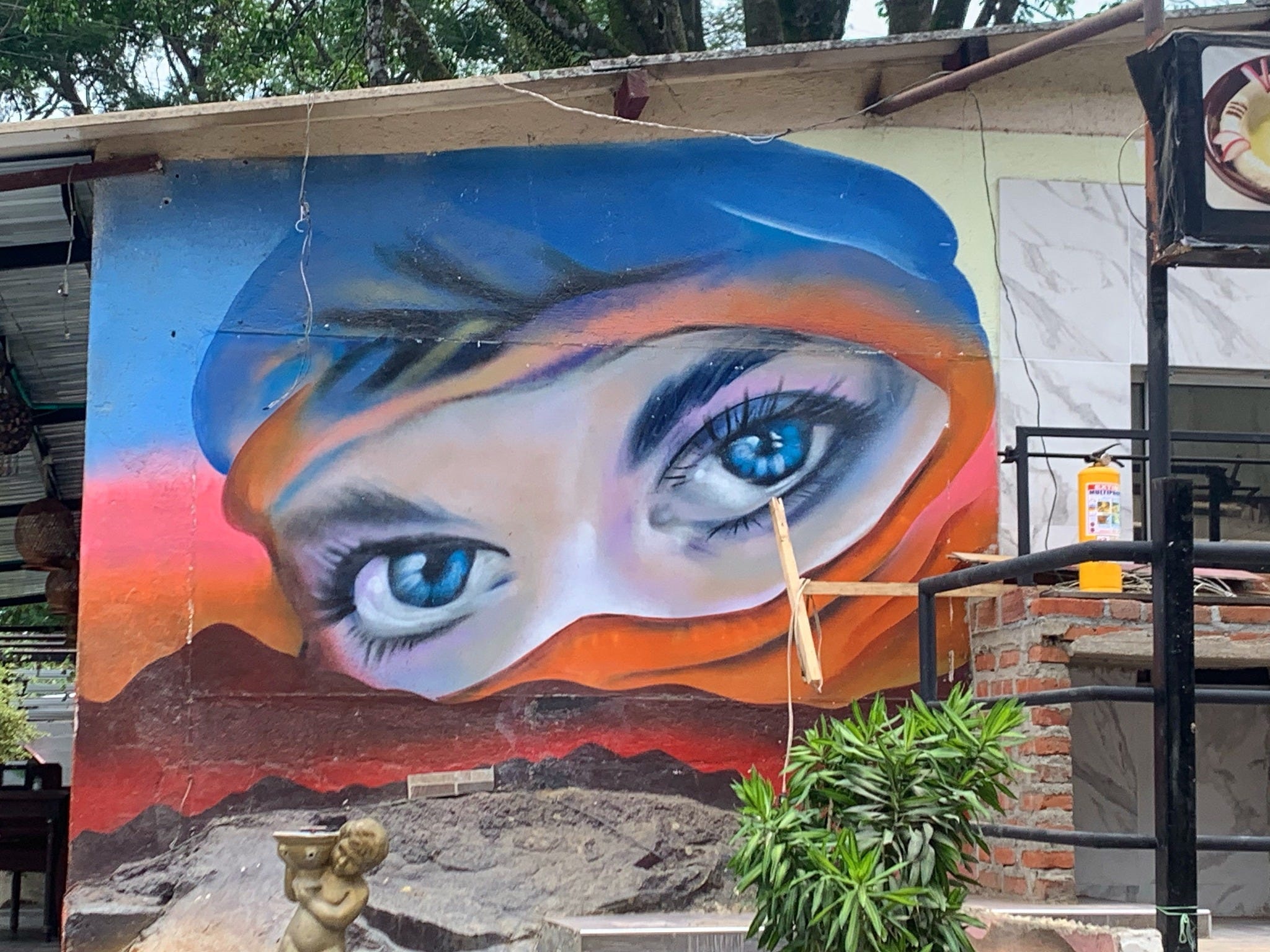
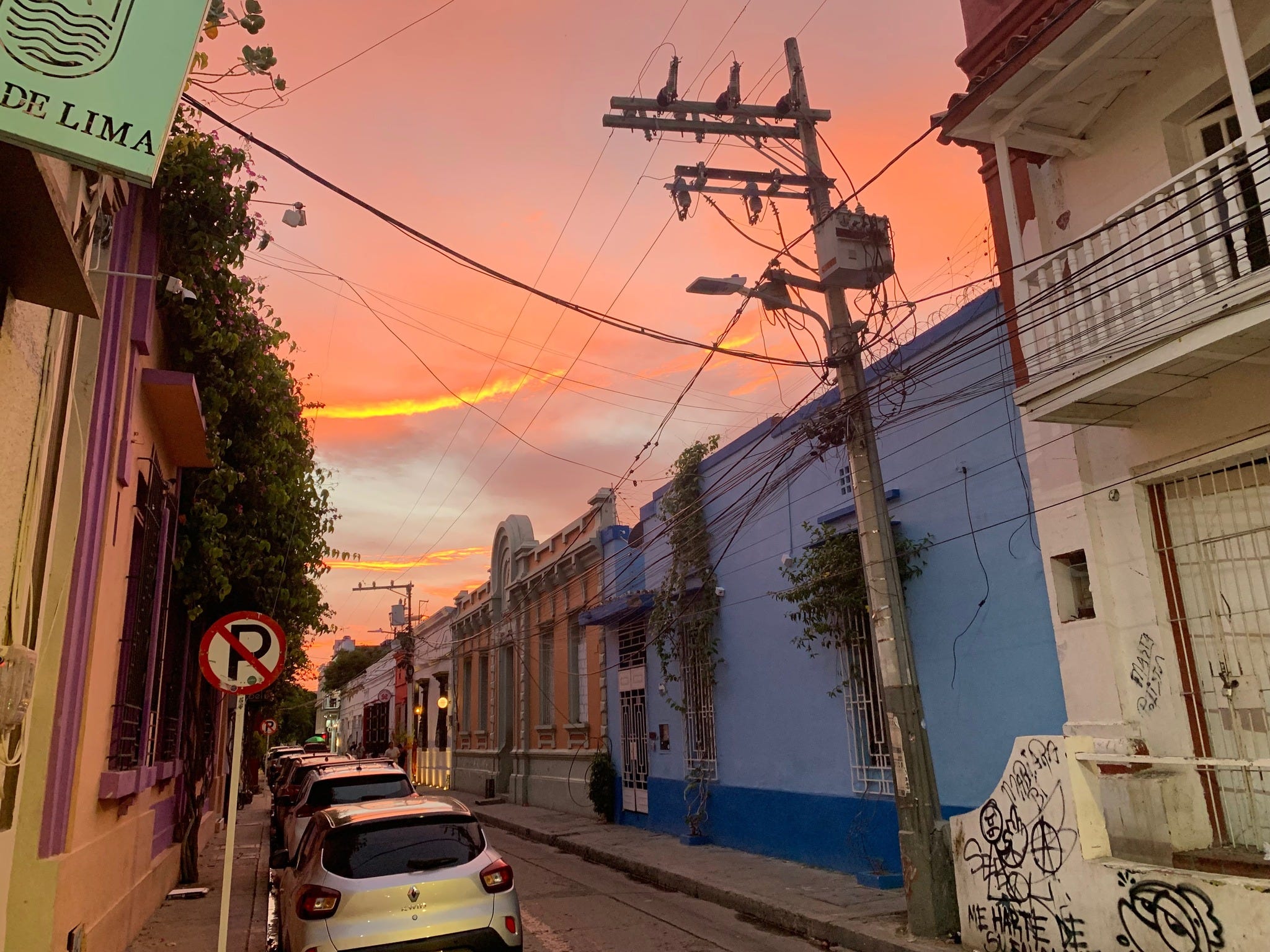
In the middle of the year that is about to close, I found myself sitting on the veranda of a little cottage in northern Colombia, just outside the Parque Nacional Natural Tayrona. Dusk was sinking fiery into the lush canopy beneath me and the air was full of the sounds of life, of birds and bats and frogs calling to one another and, just beyond, I could see the Caribbean rolling timelessly onto the shore. I took a moment to breathe it all in, that shot of pure life that the fecund humidity seemed to instill in me, a nice counterpoint to the health situation I’ve been dealing with for the last several years, and to enjoy the simple eternal rhythms of the world, feeling so far removed from the vanities and vagaries of humankind.
By almost any measure, 2025 was a brutal year. Thanks to the irresponsibility and whining self-pity of voters in my native United States, a convicted criminal and would-be despot who tried to overturn the results of a democratic election through violence once before was returned to the White House which, both symbolically and literally, he then set about demolishing. In the Democratic Republic of Congo, Gaza, Haiti, Sudan, Ukraine and elsewhere, terrible bloodletting dragged on. In Afghanistan, Cuba, Iran, Nicaragua, Venezuela and elsewhere, remorseless tyrannies continued on in power.
Here in America, the 77 million who voted to return Donald Trump to office (and the 75 million who voted not to) had the chance to see what their handiwork had wrought. Over the last year, Americans witnessed the combined forces of the United States Immigration and Customs Enforcement (ICE) and United States Customs and Border Protection (CBP), which Trump has essentially converted into his roving, masked private police force, chase screaming women down the street while attempting to kidnap them, illegally detain U.S. citizens, shoot people and then lie about it and send detainees denied due process off to a torture prison in El Salvador. With the bald, bloviating Tom Homan (the shame of the West Carthage, New York police department and Trump’s “border czar” who reportedly accepted a $50,000 bribe), the lilliputian Reinhard Heydrich-wannabe Gregory Bovino at CBP and Todd Lyons at ICE working to enforce the totalitarian whims of Trump and the Heinrich Himmler-inspired White House Deputy Chief of Staff Stephen Miller, the United States got a potent amuse-bouche of the state terrorism practiced by regimes like those in Caracas, Managua and Moscow. [For good measure, Trump also sent a range of federal and local agencies to terrorize black resident of Memphis.]
The new regime did everything it could to batter working-class and working poor Americans, from overturning a Joe Biden-era overdraft rule that capped bank overdraft fees at $5 to scrapping a Biden-era mandate that obligated airlines to pay customers for long waits due to flight delays to refusing to even consider continuing subsidies to the Affordable Care Act (ACA) in a decision that the University of Pennsylvania’s Leonard Davis Institute of Health Economics and the nonprofit health policy newsroom Tradeoffs projected “could increase the nation’s uninsured population by 60% and result in more than 51,000 additional deaths each year.” Trump routinely called for Democratic members of Congress to be murdered for suggesting that the U.S. military should refuse illegal orders from the increasingly deranged president.
The administration cut a swathe of destruction abroad, as well, with Elon Musk, the CEO of Tesla and the world’s richest man (who gave Donald Trump and Republican Party $290 million for the 2024 election cycle) using his so-called Department of Government Efficiency (DOGE) to attack the United States Agency for International Development (USAID) - perhaps the most effective means of promoting U.S. “soft power” in existence - and kill some of the world‘s poorest people. In practice, this meant Congolese rape survivors scrambling for medicine and children starving to death in Kenya and Myanmar and Sudan as Musk staggered through life blearly-eyed on a cocktail of drugs. Closer to home, Trump and U.S. Secretary of Defense Peter Hegseth conducted a lawless killing spree in Caribbean and Pacific waters, ostensibly in the name of combating drug trafficking but undertaken in violation of both international and domestic U.S. law (where drug trafficking is not a capital crime). The campaign has thus far killed over 100 people and, as it was done simultaneously with Trump’s pardoning of the former President of Honduras Juan Orlando Hernández - one of the hemisphere’s most prolific drug traffickers, sentenced in June 2024 to 45 years in a U.S. prison for conspiring to distribute more than 400 tons of cocaine and related firearms offenses - it led me to me to begin unironically referring to the “Trump Cartel” in matters of drug policy.
[Trump’s hate campaign, both at home and abroad, had other consequences, as well. In October, the Labor Department warned that the president’s crackdown on migrant workers was cutting off the nation’s agricultural labor supply and threatening “the stability of domestic food production.” The destruction of USAID and disappearance of contracts connected to it battered such entities as Georgia peanut butter suppliers. Trump’s anti-free trade tariff policy and hostility towards green energy led GM to cut thousands of jobs in Michigan, Tennessee and Ohio, all states that voted for him return to office. The citizens of West Virginia, where Trump won 70% of the votes cast in November, are suddenly having buyer’s remorse as Trump’s oligarchic policies hammer local agriculture, food banks and other entities. Customer service at the Social Security Administration has largely collapsed.]
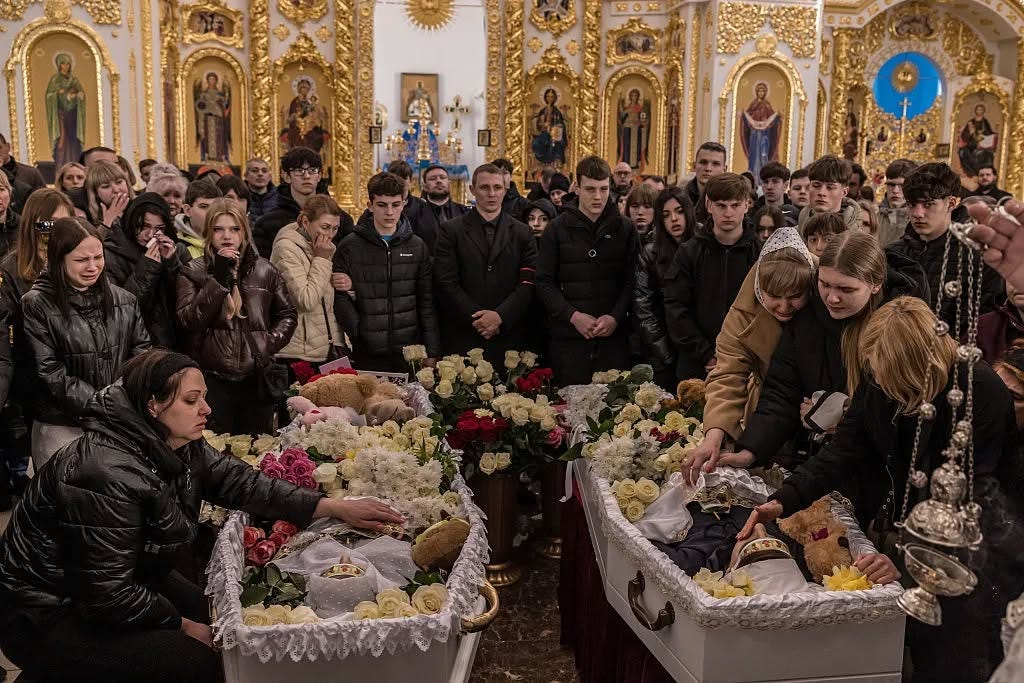
But perhaps nowhere was the true face of the “sickening moral slum of an administration,” as George F. Will called it, more visible than in its treatment of the leader and people of Ukraine. The new regime in Washington returned clearly anxious to smooth the way for Vladimir Putin, announcing the re-establishment of high-level embassy staffing in Moscow and D.C., and in February, just after returning to office, Donald Trump, his opportunistic and amoral Vice President, J.D. Vance, ambushed Ukrainian President Volodymyr Zelenskyy during a meeting at the Oval Office.
Since Vladimir Putin’s February 2022 invasion of Ukraine (itself a continuation of Putin’s 2014 invasion that saw Russia annex Crimea and parts of southeastern Ukraine), Zelenskyy and the Ukrainians have fought back against their country’s destruction among numberless horrors such as those in Bucha, where Human Rights Watch found Russian forces committed a litany of war crimes including “summary executions, other unlawful killings, enforced disappearances, and torture” (the Ukrainians are still pulling the remnants of the Russian slaughter there out of the ground today), in Mariupol, where the wanton massacre of defenseless civilians was the order of the day and in Chernihiv, Kharkiv and elsewhere, where Russian forces engaged in “unspeakable, deliberate cruelty and violence against Ukrainian civilians.” For Trump, who repeatedly dodged military service during the Vietnam War and Vance, whose six month non-combat deployment to Iraq consisted of writing articles and taking photographs, this was apparently not enough, as they publicly assailed Zelenskyy for “not acting all that thankful” for U.S. aid and for not having “said ‘thank you’ once.’”
After the regime’s outburst in the Oval Office, which should have deeply shamed any patriotic American, Trump paused all military aid to Ukraine. That same month, Zelenskyy sensibly rejected Trump’s demand that Ukraine hand over 50 percent of its mineral resources to the United States even as the United States voted with Russia, North Korea and 15 other Moscow-aligned nations against a U.N. resolution condemning Russian aggression in Ukraine and calling for the return of Ukrainian territory. Also in February, the body of the extraordinarily courageous Ukrainian journalist Victoria Roshchyna - who had disappeared in August 2023 - was returned to Ukrainian authorities with, as the Washington Post reported, “her head…shaved, her neck bruised…A tag with her last name attached to one shin, and burn marks on her feet…Medical examiners later found a broken rib and possible traces of electric shock. Some of her organs, including her brain, had been removed.” She had been held, tortured and murdered in part of the vast gulag that Russia uses to torment Ukrainian prisoners.
Thanks in large part to the intercession of European leaders (who actually physically accompanied Zelenskyy to a subsequent meeting with Trump in August), relations between Zelenskyy and Trump were somewhat soothed, but Putin’s whims clearly remained in the driver’s seat of U.S. policy, with Russian talk show host Evgeny Popov even bragging that “Trump is now doing our job for us” by “sawing Europe into pieces.” In March, CIA Director John Ratcliffe revealed that the U.S. has paused intelligence-sharing with Ukraine to try to force more negotiations with Putin, while after a groveling tête-à-tête with Putin in Alaska this past August, Trump dropped any demand for a ceasefire in Ukraine and simply told Zelenskyy that Putin wanted the eastern Donbas region in exchange for halting the war. During an October phone call, Trump’s “special envoy” to the process, Steve Witkoff, personally advised Putin’s top foreign policy aide, Yuri Ushakov, on how Putin might best approach Trump during the negotiating process. [Earlier this month, NBC News reported that Witkoff has even repeatedly tried to outflank Secretary of State Marco Rubio - himself a slavish Trump devotee - in an effort to craft a deal more favourable to the Kremlin.] In an October meeting at the White House, Trump unloaded a profanity-laced tirade at Zelenskyy, telling the latter he had to accept Russia’s terms for ending the war or Putin would “destroy” Ukraine and only last month, Trump threatened to cut intelligence sharing and weapons supplies for Ukraine to force it into agreeing to the Kremlin-friendly framework of the U.S.-brokered deal.
And what were Ukrainians living through during this time?
In April - on Palm Sunday - a Russian missile strike in Sumy killed more than 30 people, including two children. A single night in May saw Russia fire 367 drones and missiles against Ukraine, killing 12 people, including three children, and injuring dozens. In a June attack against residential apartment blocks, hospitals and sports infrastructure locations that used 352 Russian drones and 16 missiles, nine people were killed and over 30 wounded. In October, the Telegraph conducted an investigation that found that those living under Russian occupation in Ukriane have suffered “rape, torture and forced disappearances” at a level that revealed “a pattern of systematic abuse intended to terrorise the local population into submission” with “every survivor [describing] either witnessing or being subjected to sexual violence.” Last week, on Christmas Eve, in another massive drone attack, Putin killed at least seven people. By September, NATO forces were even shooting down Russian drones over Poland.
But even somehow, amidst such relentless terror, the Ukrainians served as a reminder to the rest of us not to give up. In an eulogy for artist Marharyta Polovinko, killed at only 31 years old while fighting on the frontlines near Kharkiv this past April, fellow artist Dasha Chechushkova told the Kyiv Independent that Polovinko “had to act, to stand against the terror. Because Marharyta truly was a warrior — for life, for freedom. The strength, calm, decisiveness, and courage she radiated — that is and was the real beauty of life. And it remains an inspiration, even now.”
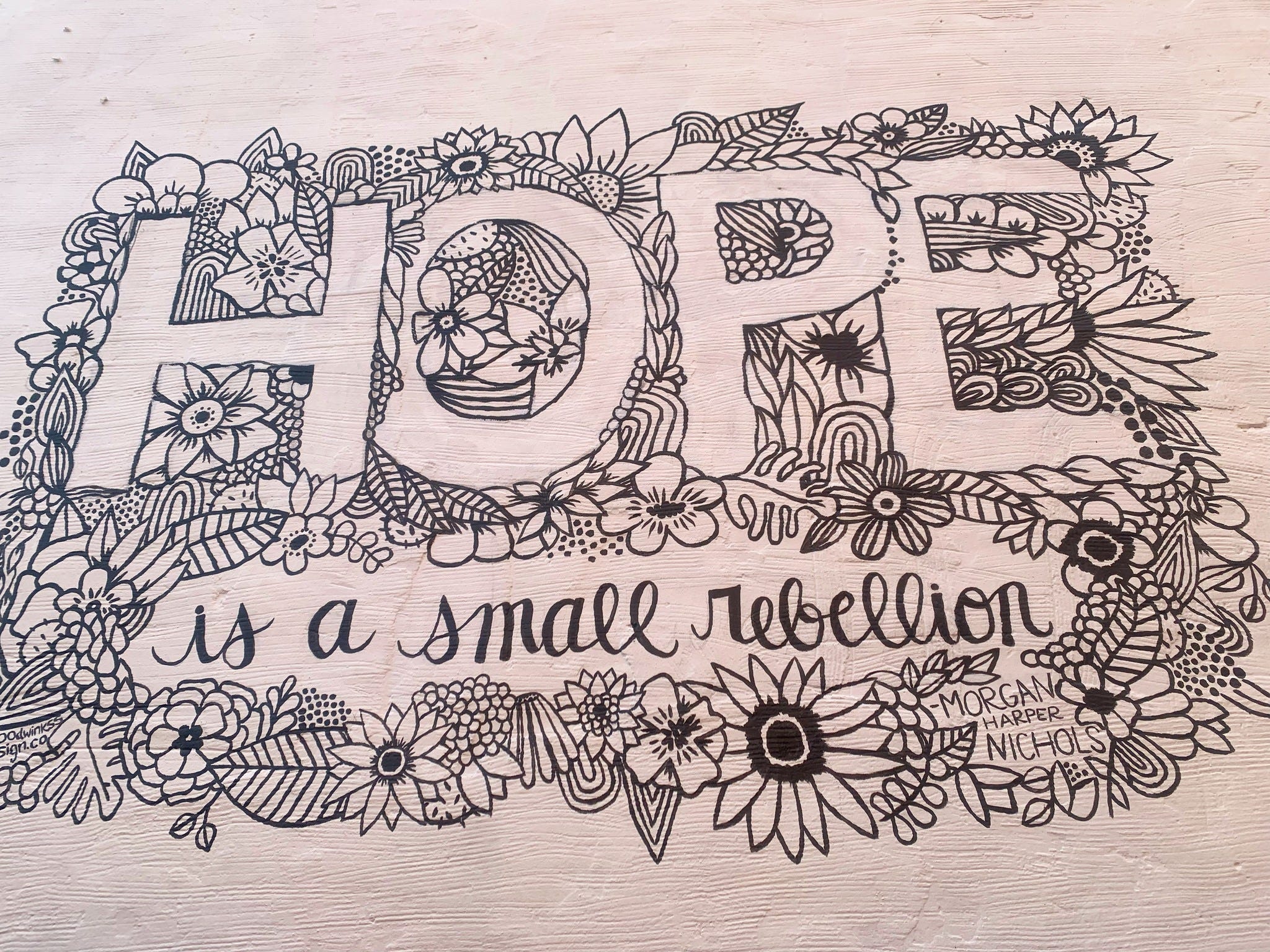
In the words of the former Czechoslovakian statesman Alexander Dubček, whose desire for a more open society during the Prague Spring was crushed by Soviet tanks, hope dies last.
In U.S. elections last month, the Democrats ran the table on the Republicans across the country, with Ed Kilgore writing in New York Magazine
Democrats swept the 2025 elections in almost every competitive venue. They flipped the governorship of Virginia and held onto the governorship of New Jersey, in each instance crushing their Republican opponents. In New York City, Zohran Mamdani won easily on a wave of high turnout and voter excitement. At the same time, Democrats stopped efforts to purge their judges in Pennsylvania and rig voting rules in Maine…Everywhere you look, the allegedly unbeatable Trump legacy is, well, taking a beating. The tide even flowed down to Georgia, where Democrats won two statewide special elections, flipping two seats on the utility-rate-setting Public Service Commission.
Even in deep red Mississippi, the Democrats managed to flip two seats and break the Republican’s state House supermajority. In my home county in Pennsylvania, Lancaster County, where Trump won 57.20% of the vote in last year’s presidential elections, Democrats won control of schools boards in the districts of Hempfield and Manheim Township, likely for the first time in history. Everywhere, Trump’s 2024 gains among Latinos swung dramatically back to Democrats, with New Jersey Democratic gubernatorial candidate Mikie Sherrill carrying 68% of Latino voters in the state and flipping 18% of Latino Trump voters back into the Democratic fold. In her successful race for Virginia’s governor, Democrat Abigail Spanberger won by over 14 percentage points, flipping six counties and independent cities that had supported Trump in 2024. Earlier this month, Democrat Eileen Higgins defeated her Trump-backed Republican opponent Emilio González to become mayor of Miami, the first Democratic to win the office since 1997 and first woman ever to accomplish that feat. The saga of Trump’s intimate relationship with disgraced and deceased sex criminal Jeffrey Epstein continues, cut by cut, to damage him and his political brand, as he - in defiance of Congress and the law - desperately seeks to keep the full story of his connections to Epstein from becoming public. Amid harassment and death threats, Indiana’s supermajority Republican state legislature even rejected Trump’s push for mid-decade redistricting. As the cornered, rabid animal in the White House and his acolytes become ever more dangerous, we still have a big fight on our hands, but we may not be as far gone as I feared that we were.
And as for me, your humble correspondent?
I moved on from Baltimore, a place whose struggle I respect but whose daily reality I found deeply sad, and was greatly blessed to do some traveling this year, not only to Colombia’s Caribbean coast but also back to Haiti (to Port-au-Prince where so few foreign journalists bother to even visit anymore) with a brief stopover in Turks & Caicos (where seeing a Caribbean place that was pristinely clean and expensive was quite jarring) and also to my beloved isla del encanto of Puerto Rico, where I delivered a lecture on Haiti in Spanish to the wonderful students at the Universidad de Puerto Rico and the Instituto de Estudios del Caribe. I continued, I hope, to produce material of some insight and value on this newsletter and my podcast, both of which you can subscribe to here. In a few days, I am slated to return from my temporary abode in my native Pennsylvania to the rather warmer climes of Florida to begin teaching journalism to the students at the University of South Florida in St. Petersburg. My new book, With the Pen In One Hand and the Sword in the Other: Haiti and the United States in the Nineteenth Century, is slated to be published by University of Georgia Press in late summer.
I’m not sure if I’ve discovered the secret to a full life entirely yet, but it seems to me that it has something to do with being useful and being needed, acutely feeling the human connection we all share, to keep moving both physically and intellectually and to somehow unite taking the long view of the things with the ability to live in the moment. Despite all its struggles, life remains full of wonders to be discovered, and I wish that some of them revel themselves to you in 2026. As the poet Seamus Heaney wrote in The Cure at Troy
So hope for a great sea-change
On the far side of revenge.
Believe that a farther shore
Is reachable from here.
Believe in miracles
And cures and healing wells.
Con mucho amor,
MD
Michael, your work is both useful and needed. Excellent perspective as always. Congratulations on your new teaching post and may you have a healthy, deeply rewarding year.
Paid! And now I can comment. "Hope is a small rebellion." Thank you for including that. It's certainly something the evil ones want us to abandon. It's the first condition for resistance. Here's to hope in this New Year.