
9/11
What lessons do you take from the most terrible of days?

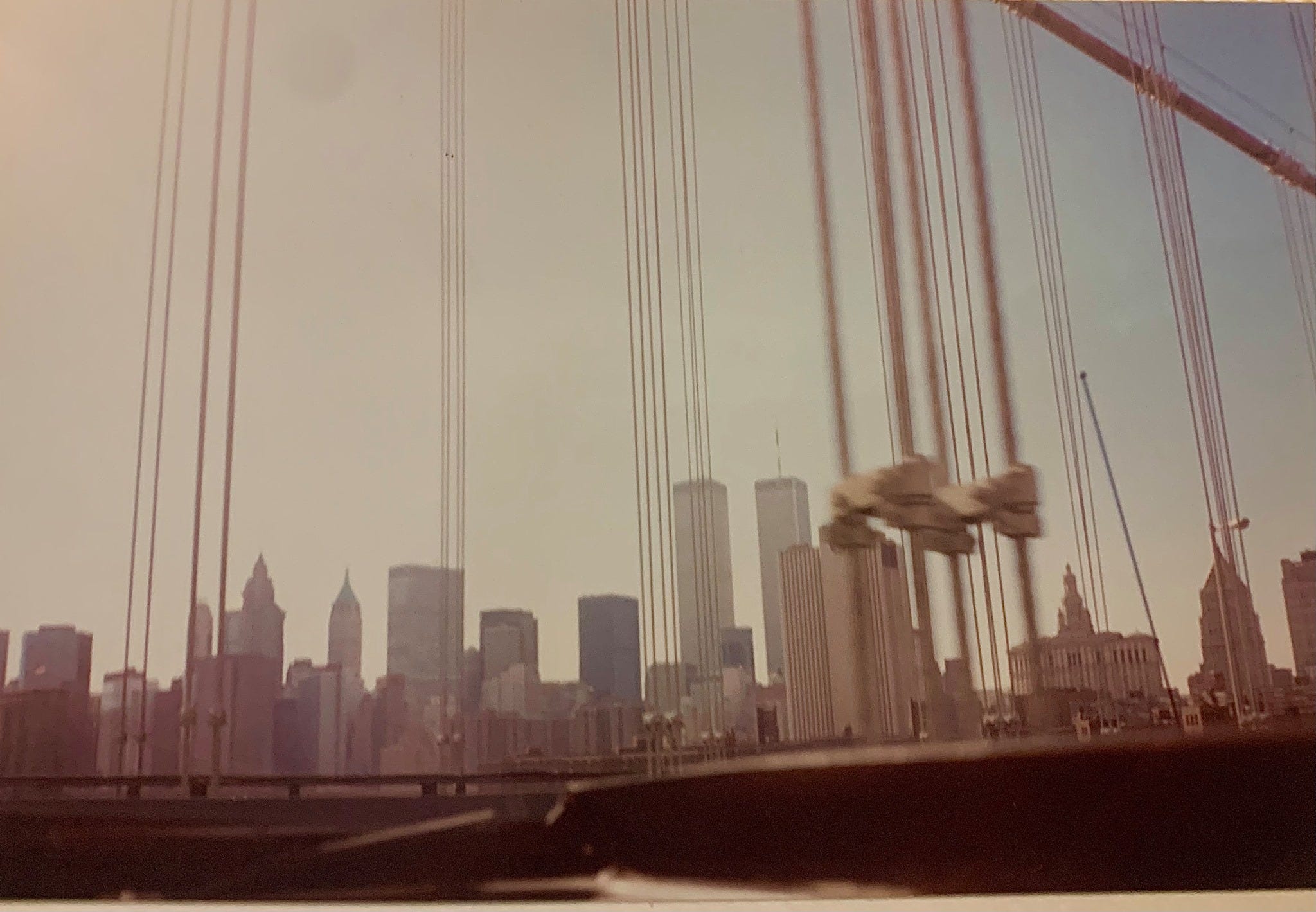
To be clear, September 11th was an ill-fated day even before the terrorist attacks of Al-Qaeda on New York City and Wasgington, DC, now 22 years ago.
Fifty years ago today, a coup d'état led by General Augusto Pinochet and supported by the administration of U.S. President Richard Nixon toppled the democratically-elected Unidad Popular government of Chile’s president Salvador Allende and led to mass death, state terrorism, repression and the destruction of the democratic tradition there for 16 years, a bill of destruction in no way exculpated by Allende’s short-sighted flirtation with Cuba’s communist dictator Fidel Castro.
Thirty five years ago today. pro-democracy activists and ordinary churchgoers were massacred at the Église Saint-Jean-Bosco in Port-au-Prince, Haiti, as Jean-Bertrand Aristide, then a Catholic priest, attempted to say mass, an atrocity in no way exculpated by the fact that Aristide himself would later go on to become a monster
I was a bit shy of two-months old when the coup in Chile happened, living in a small apartment in Pennsylvania, the first son of two young parents, one of whom was driving trucks and would soon be hired as a police officer, largely because he spoke Spanish, and the other who was working as a cashier at a woman’s clothing store. When the Église Saint-Jean-Bosco massacre occurred, I was 15, just starting high-school and playing guitar in my basement as the days grew shorter with the approach of autumn. I was more aware of the world around me, but dimly and in a kind of piecemeal way in that young, pre-internet age.
I was 28 years old on 11 September 2001. I had been living in New York City - or more precisely Brooklyn - since graduating from a school set on a picturesque stretch of river in the Hudson Valley, minus a couple of interludes in Miami and Port-au-Prince. I was getting ready to move to Haiti full-time to take the job as correspondent for Reuters there, a move that would change the course of my life. A couple weeks before, I met my friend Sebastian down in the Financial District where he was having a meeting and we walked through the plaza at the World Trade Center looking up at the towers vaulting off into the sky and said “amazing.” I remember attending parties at Windows on the World, the restaurant on the top of the North Tower, and being awe-struck at a view that seemed to stretch on forever.
I remember this September 11th was primary day, the day that voters would choose the nominee for who would replace outgoing mayor Rudolph Giuliani who, hard as it might be to believe, for all his negative qualities, was not yet the risible, paranoid, drink-soaked figure he is today. I was living on 5th Avenue in Park Slope on a stretch of blocks that were then largely Mexican, Dominican and Puerto Rican and which today, like so much of the city I once called home, have been sanitized and blandified to the point of near non-existence.
I stepped outside and it was a beautiful morning, the sky so clear you were almost afraid it would crack if you looked at it too hard, and took the D train to Manhattan and saw the World Trade Center as we passed over the Manhattan Bridge and then, as we went underground again once we had crossed the East River, noticed as the train started crawling, skipping stops and remember worrying that I would be late for the temp job that I was working to make ends meet before I left for Haiti. I got out of the subway on 34th street to hear sirens everywhere, and remember thinking that some dignitary or politician must be in town. I remember speaking to someone - I don't remember who - who told me a plane had hit one of the twin towers and assumed that it was some idiot flying a Cessna or something who must have accidentally hit one of the buildings.
I took the elevator up to the office in One Penn Plaza where I was working, where a broad window faced south over the island of Manhattan and as I turned to get out of the lift, I saw a fireball explode over the city as the second plane hit the South Tower. My brain almost rejected the information. I couldn’t really process or understand what I was seeing. At this point, people began leaving the building en masse and I spied an African-American co-worker I knew - I wish I could remember his name - who also lived in Brooklyn and he and I began walking south through the city. Sirens were everywhere and you could already start to smell burning on the wind. We stopped in at an Irish bar in Little Korea and there, horrified, watched as the buildings collapsed on television. I remember people frantically trying to get a hold of friends and relatives on the primitive cell phones of the time, who they either knew or thought might be in the towers. I remember one woman crying that her husband worked there.
The rest of the day comes back in strobe-light flashes. My cell phone didn’t work, yet I somehow managed to find a working payphone to get word to my family in Pennsylvania that I was alright. I met my brother, who was in his first year of university, outside of his dorm at New York University. He and his friends were going to donate blood. I walked home across the Manhattan Bridge with many thousands of other New Yorkers of every conceivable race, religion, national origin and sexual orientation as we endured a terrible baptism of debris floating down with a poignant and terrible gentleness, including photos and papers that I assume must have been from the fallen towers and what I can only imagine were the last mortal remains of some of those who had gone. I ended up at a friend’s apartment in Park Slope along with him and his girlfriend (now wife) and another friend who lived on Flatbush Avenue, watching the horror unfold on television and drinking, trying to process it all. Miraculously, none of us knew anyone who died, though an ex girlfriend of mine had lost her aunt. Very soon, the flyers went up all over the city, as people desperately searched for news on their loved ones who left for work that day and never came home. Most of them never would.
I would live in New York again, briefly, from 2005 until 2007, before moving to Paris and then to Kinshasa in the Democratic Republic of Congo, but I don’t think I was ever more proud of the city than I was in those terrible days after September 11th. As diverse as tableau of humanity as one can imagine all pitching in to help the metropolis make it from one day to the next, my neighbors going out of their way to patronize Arab and Muslim businesses in the days immediately after the attacks to state the obvious, that a bunch of jihadist lumps didn’t represent all Arabs and Muslims anymore than the Ku Klux Klan represented all Americans. And I noted, with the practiced, wry cynicism familiar to all New Yorkers, about how so many who would make political use of the terrible attacks were too often those who hated New York City and everything it stood for: Pluralism, tolerance, sexual liberation, cosmopolitanism, sophistication, an international outlook that embraces the rest of the world rather than cowers in fear from it.
All these years later, how has the world changed? Chile, for all its problems and challenges, is a vibrant, pluralistic, multiparty democracy today. Haiti, which I have returned to over and over again throughout the years, and which has shared great wisdom with me, is in a state of terrible anarchy and criminal sadism, with gangs that were first coming to prominence when I moved there in 2001 now exerting a terrifying power of life and death over the country’s citizens that was unthinkable even then. The citizens of Haiti deserve no more to be abandoned to their fate than the people of New York City did 22 years ago as, they too, in a real sense, are being oppressed by what is in many ways a kind of terrorism they did not ask for nor do they deserve.
I have always thought that pluralistic, inclusive, secular democracy was something worth defending. Today, what feels like several lifetimes later from that day in 2001, I still do. I have always thought that empathy and compassion for the suffering and the struggles of others - even if they don’t really affect you directly - is one of the most beautiful of human traits, the ability to see through the differences we as humans have to the common humanity we all share. I still think that. Though Americans excel at self-mythologizing - and this day has unquestionably entered that realm of self-mythology - I think the ultimate lesson we can take from it is that, whatever the superficial differences we may have, we are all in this together. So if there is any lesson I would take from that awful day it would be love one another, as hard as that might seem sometimes.